Are Veneers Really Worth the Long-Term Cost Compared to Braces?
Comparing veneers vs braces cost? Discover which smile makeover fits your budget and goals. Call Long Beach Family Dentist today to book your consultation!
Read More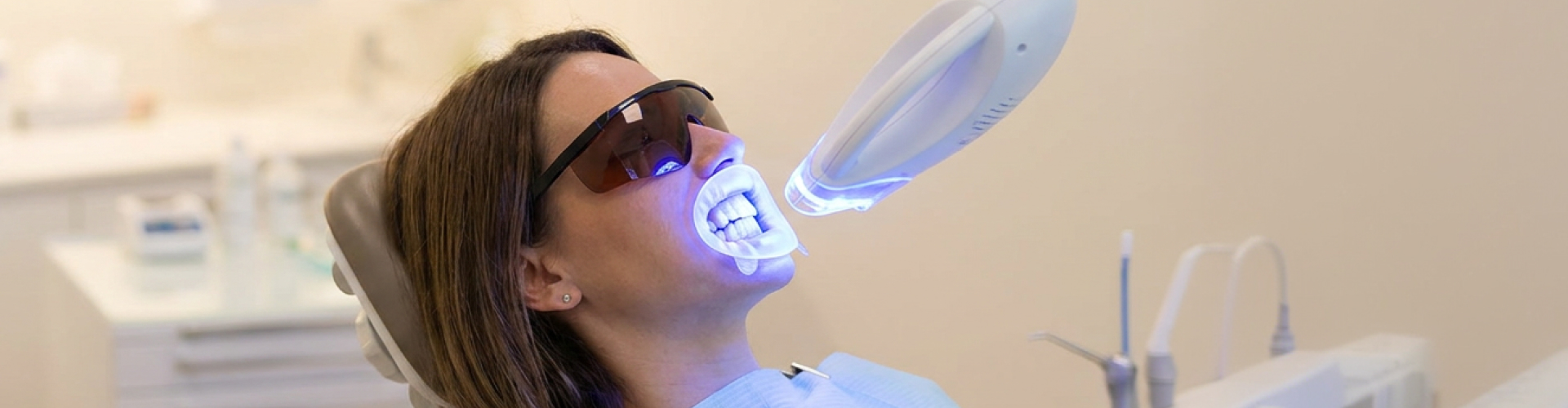
Teeth whitening is safe for most people, but sensitive teeth, exposed root surfaces, and deep intrinsic stains require a more careful approach than generic OTC products deliver. Understanding why your teeth respond the way they do to bleaching agents helps you get better results — and avoid real damage.
Most advice for sensitive teeth stops at "use a gentler strip." That's reactive guidance, and it often means patients either abandon whitening or endure sharp nerve pain — called "zingers" — throughout treatment.
For Long Beach-area patients, a more effective approach is preventative tubule occlusion. Before any bleaching product touches your teeth, spend two weeks consistently applying a desensitizing agent containing nano-hydroxyapatite (n-HAp) or 5% potassium nitrate. These compounds physically plug the exposed dentinal tubules — the microscopic channels that run from your enamel surface toward the nerve. When those tubules are occluded before bleaching begins, the peroxide has a much harder time reaching the pulp, which is the primary driver of whitening-related nerve sensitivity.
According to WebMD, keeping higher-concentration peroxide on teeth for too long dehydrates them and increases sensitivity — a risk that pre-conditioning significantly reduces. After two weeks of daily desensitizing treatment, most patients can tolerate standard 10–14% carbamide peroxide without the acute discomfort that typically derails their whitening plans.
Your dentist can confirm whether your sensitivity stems from dentinal exposure, gum disease gingivitis, or another cause entirely — because the right pre-treatment depends on what's actually driving the problem.
Heavy coffee drinkers and long-term smokers often notice the darkest staining right at the gum line. Applying whitening gel directly to those margins frequently results in severe localized pain with little to no lightening. Understanding the anatomy explains why.
Tooth enamel covers the crown. Below the gumline, the root surface is covered by cementum — a much softer, more porous tissue. When gum recession occurs, that cementum and the underlying dentin become exposed. These root surfaces absorb tar, tannins, and chromogens deeply, creating stains that are structurally different from enamel stains.
Peroxide bleaching works by oxidizing chromogen molecules within the enamel and dentin matrix. But cementum doesn't respond to bleaching the same way enamel does. Applying gel to exposed root surfaces doesn't lighten them effectively — it simply irritates the nerve endings concentrated in that area, triggering acute pulpitis-like pain.
The ADA's guidance on whitening notes that extrinsic stains on enamel respond well to mechanical and chemical interventions, but root-surface and cementum staining requires different management entirely. Mechanical approaches — such as glycine air polishing, targeted microabrasion, or composite masking of exposed margins — address gum-line darkness more effectively and safely than any bleaching agent.
This is why a professional evaluation matters before beginning any whitening regimen. What looks like a uniform staining problem is often two completely different tissue types requiring two completely different solutions.
Competing articles typically advise avoiding coffee and cigarettes "for a bit" after whitening. That framing dramatically understates the actual risk.
Whitening agents temporarily strip the salivary pellicle — the thin protein film that normally coats and protects your enamel. For roughly 48 hours post-treatment, the underlying hydroxyapatite crystals are essentially naked and highly porous. During this window, tobacco tar and coffee tannins (chlorogenic acids) don't just sit on the surface the way they normally would. They pull directly into the deep dentinal matrix.
What would ordinarily become a removable extrinsic stain — the kind a cleaning and exam or whitening strip can address — instead becomes a stubborn intrinsic stain embedded in the tooth structure itself. Healthline's overview of teeth whitening explains how intrinsic staining penetrates beyond the enamel surface into the dentin layer, where it's significantly harder to reverse.
The practical rule: treat the 48 hours after any whitening treatment as a complete blackout period for tobacco, coffee, tea, red wine, and dark-pigmented foods. This isn't about preserving your results cosmetically — it's about preventing a category change in stain type that may require far more aggressive treatment to correct later.
Salivary remineralization naturally begins recoating enamel during this period, but according to ADA News, regular bleaching without adequate recovery time can outpace that remineralization, leading to progressive enamel erosion over time.
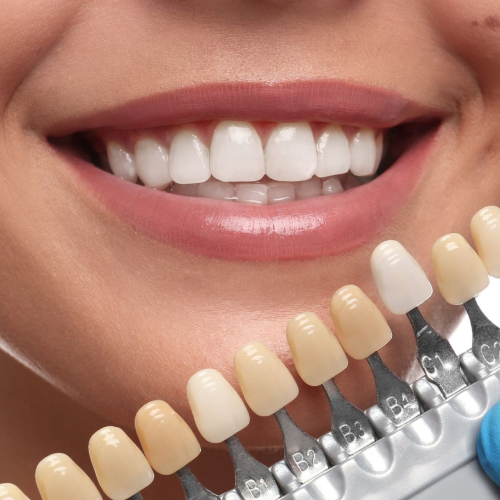
Not all stains respond equally. Mouthhealthy.org from the ADA confirms that yellow teeth bleach well, brown tones respond moderately, and gray staining — often from tetracycline exposure — may not respond at all. Whitening also has zero effect on tooth crowns, porcelain veneers, or composite fillings, which can create uneven results if restorations are present.
For deep stains from smoking or heavy coffee use, over-the-counter strips typically produce modest improvement at best. Professional teeth whitening uses significantly higher peroxide concentrations and can lighten teeth several shades in a single session — a result that OTC products rarely match.
The main side effects across all whitening methods are tooth sensitivity and gum irritation, both of which are usually temporary. Overuse, however, carries real consequences: enamel erosion, translucent tooth edges, and chronic sensitivity that outlasts the treatment itself.
If you have sensitive teeth, gum recession, or stubborn stains from smoking or coffee, a personalized plan makes a significant difference. Long Beach Family Dentist offers professional whitening evaluations for patients throughout Long Beach, California — helping you understand exactly what's causing your discoloration and which approach will actually work for your specific situation. Contact us to schedule your dental exam consultation.
Medical disclaimer: This article is for informational purposes only and does not constitute professional dental or medical advice. Always consult a licensed dentist before beginning any teeth whitening treatment.
Fresh news from the dental world

Mon 8AM - 5PM
Tue 8AM - 5PM
Wed-Thu 8AM - 5PM
Fri 8AM - 5PM
Sat 9AM - 3PM
Sun Closed
Check out what our patients are saying in Long Beach, CA...


“My favorite dentist...”
The service here is amazing and they make you feel comfortable. I'm one of those people that hates to go to the dentist and the dentists that I went to in the past were not that great with service. Overall I found my favorite dentist service now at Long Beach Family Dentist.

“Clean and friendly...”
Very clean and friendly crew. I really enjoyed myself.

“A positive experience...”
Very clean and organized office! Entire staff was pleasant and friendly, and seems interested in ensuring I had a positive experience. Will definitely return! Affordable rates.

“Answers any questions...”
I been a patient here for over twelve years. Andrea greeted me and got my folder set up. Toni is very friendly and answers any questions you have promptly, when I always come in she greets you with a smile and makes your appointment enjoyable. Today Jovani and Dr. Joan made this experience great. I recommend this dentist for new patients.
“My favorite dentist...”
The service here is amazing and they make you feel comfortable. I'm one of those people that hates to go to the dentist and the dentists that I went to in the past were not that great with service. Overall I found my favorite dentist service now at Long Beach Family Dentist.
“Clean and friendly...”
Very clean and friendly crew. I really enjoyed myself.
Check out our accreditations, sources, and relationships in the wide world of dentistry...











Check us out and follow our Long Beach, CA practice on social media...